
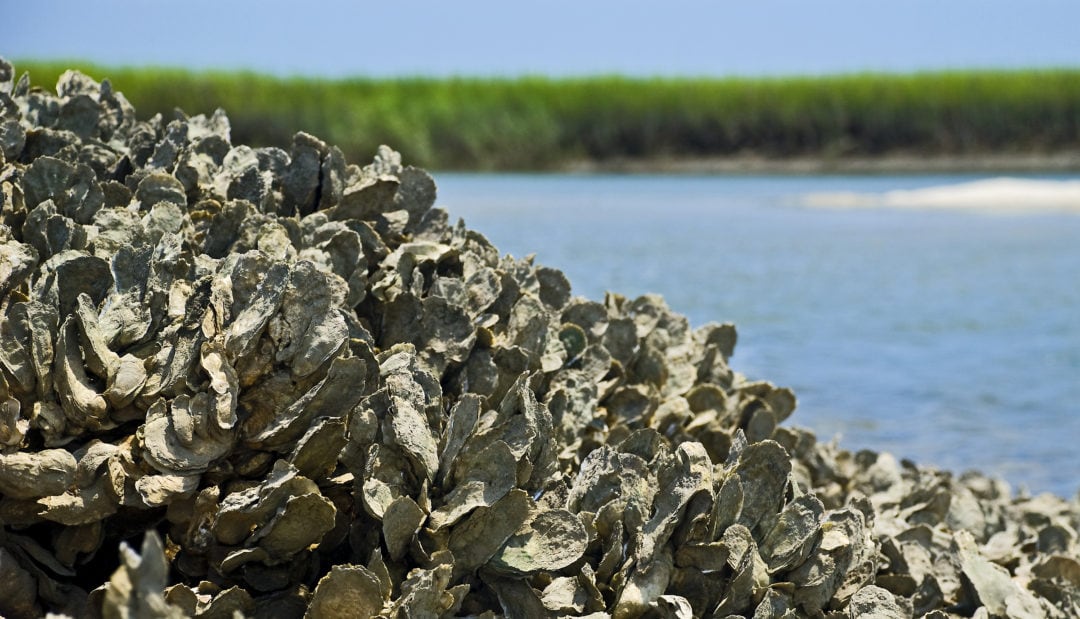
People ask me why a group of volunteers, high school interns and a town hatchery spend their weekends shoveling old shells into mesh bags. The short answer: our harbors need oyster reefs, and most of them are gone.
What we lost
Oyster reefs were once a natural part of New York's bays and estuaries. Overharvesting, mismanagement and declining water quality wiped most of them out. When the reefs disappeared, so did the free services they provided.
What a reef actually does
It cleans the water. An adult oyster can filter up to 50 gallons of water a day. Oysters eat phytoplankton, the tiny algae that explode into harmful blooms when too much nitrogen washes into our harbors from fertilizer and septic systems. A healthy reef keeps that system in balance.
It builds habitat. Oysters settle on other oyster shells, so a reef keeps growing. Crabs, shrimp, juvenile fish and plant life move in. Think of it as the coral reef of colder waters.
It protects the shoreline. Reefs absorb wave and current energy before it reaches the marsh edge, which helps slow erosion as storms get stronger.
Why here, why now
East End harbors like Accabonac and Three Mile are dealing with nitrogen, bacteria and algal blooms. Reefs are not a silver bullet, but they are one of the most cost-effective tools we have, and they work around the clock with every tide.
Since 2022, South Fork Sea Farmers has partnered with the East Hampton Town Shellfish Hatchery and East Hampton High School interns to build community oyster reefs in Accabonac Harbor and Three Mile Harbor. Our monitoring shows they are surviving, growing and, in Accabonac, starting to reproduce on their own.
Why it's a community project
Every reef we build uses shells from local restaurants, spat grown at the town hatchery, and a lot of volunteer muscle. Students present the plans to the Town Trustees, help navigate state permits, and stand in the water placing bags. That's the part I love most: the reef belongs to everyone who helped build it.
Want to be part of the next one? Volunteer with us, drop off your shells at one of our public shell drops, or support the work.

Subscribe to Our Marine Conservation Efforts
Keep yourself informed and connected with our community by checking out our newest blog posts and resources, and stay current with upcoming events.