
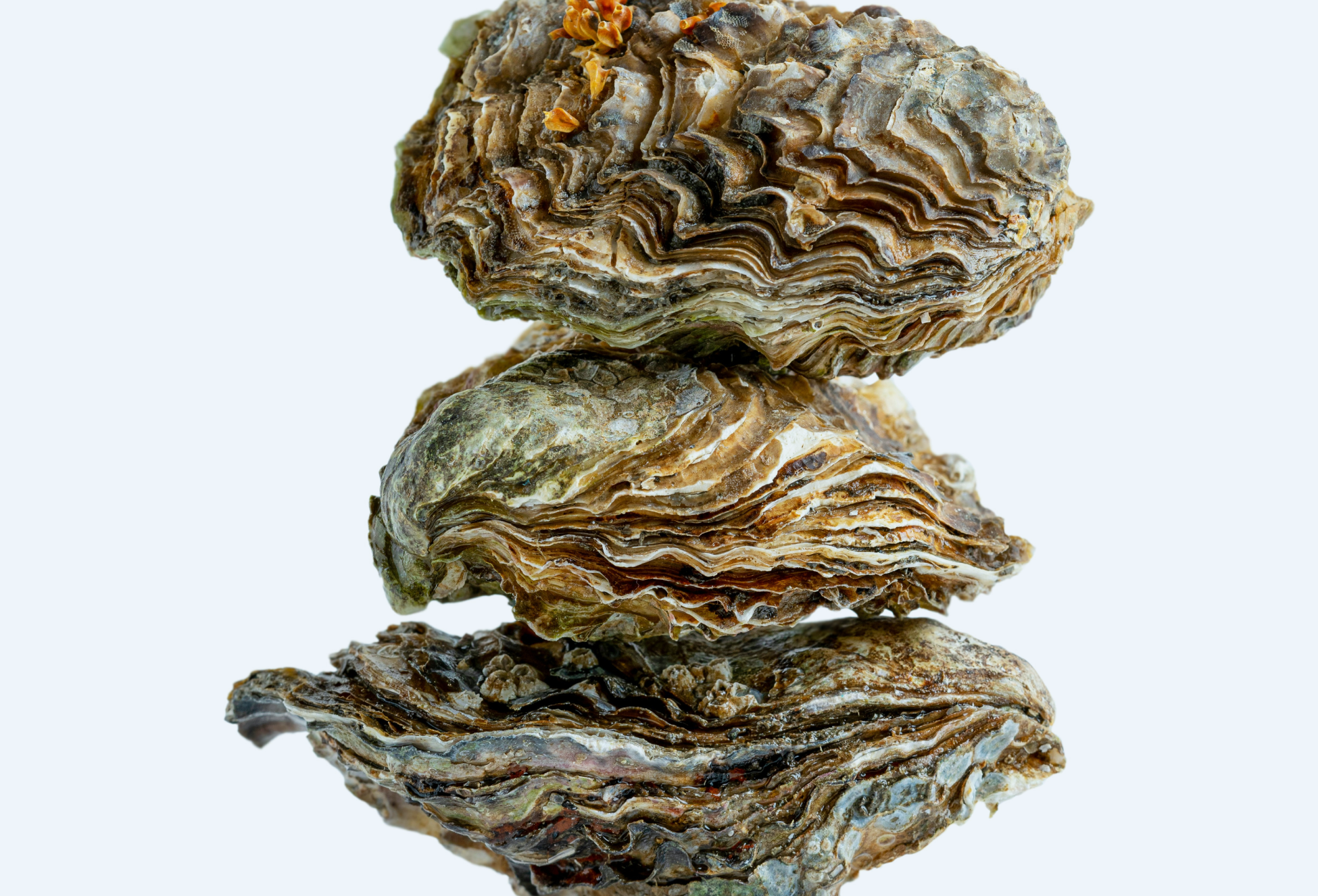
Every summer, East End restaurants shuck thousands of oysters. For years most of those shells went in the trash. Now a growing number of them end up back in the bay as the foundation of new oyster reefs.
Why shells matter
Baby oysters, called larvae, need a hard surface to attach to, and their favorite is another oyster shell. Without enough shell on the bottom, oysters have nowhere to settle and reefs can't rebuild. Shell is the raw material of every reef we build, and it's in short supply.
Step 1: Collect
Our partner restaurants set aside shells instead of tossing them. Volunteers and local shellfish businesses help pick them up, and Mickey's Carting has donated trucking to move large loads. We also work alongside regional programs like Half Shells for Habitat and the Billion Oyster Project.
Step 2: Cure
Fresh shells can carry bacteria or pests, so they can't go straight into the water. We clean them and let them cure outdoors in the sun for six to twelve months until they're safe to use.
Step 3: Bag
Interns and volunteers fill hundreds of biodegradable mesh bags with three to four shovelfuls of cured shell each. A single reef can take up to about 700 bags. The bags hold the reef together while it gets established, then break down naturally.
Step 4: Set
This is where the East Hampton Town Shellfish Hatchery works its magic. About half the bags go into large tanks, and the hatchery coaxes mature oysters into spawning by gradually warming the water. The larvae are added to the tanks and settle onto the shells. After about four weeks, you can see baby oysters growing on them. This is called spat-on-shell.
Step 5: Build
On build day, plain shell bags go down first to form the base, and the spat-on-shell bags go on top. Volunteers pass bags from boats to people standing in the water, who place them in the approved pattern. Within a season, the reef is filtering water and attracting marine life.
Your part
If you own or manage a restaurant, become a partner; it costs nothing and keeps shells out of the landfill. If you shuck at home, bring your shells to one of our public shell drops. Every bucket counts.

Subscribe to Our Marine Conservation Efforts
Keep yourself informed and connected with our community by checking out our newest blog posts and resources, and stay current with upcoming events.